Children are natural artists. They see the world not through rules, but through wonder — and art is their language of exploration. When we teach abstract art to children, we don’t just show them how to paint; we show them how to feel, to express, and to discover the beauty of their own perspective.
As an Art Teacher and Montessori Educator, I’ve witnessed how abstract art empowers young minds to connect creativity with confidence. It’s not about perfect lines or realistic forms — it’s about unlocking imagination and helping children recognize that their emotions, instincts, and choices have meaning.
Letting young minds paint their emotions, not their expectations
Freedom: The Joy of Boundless Expression
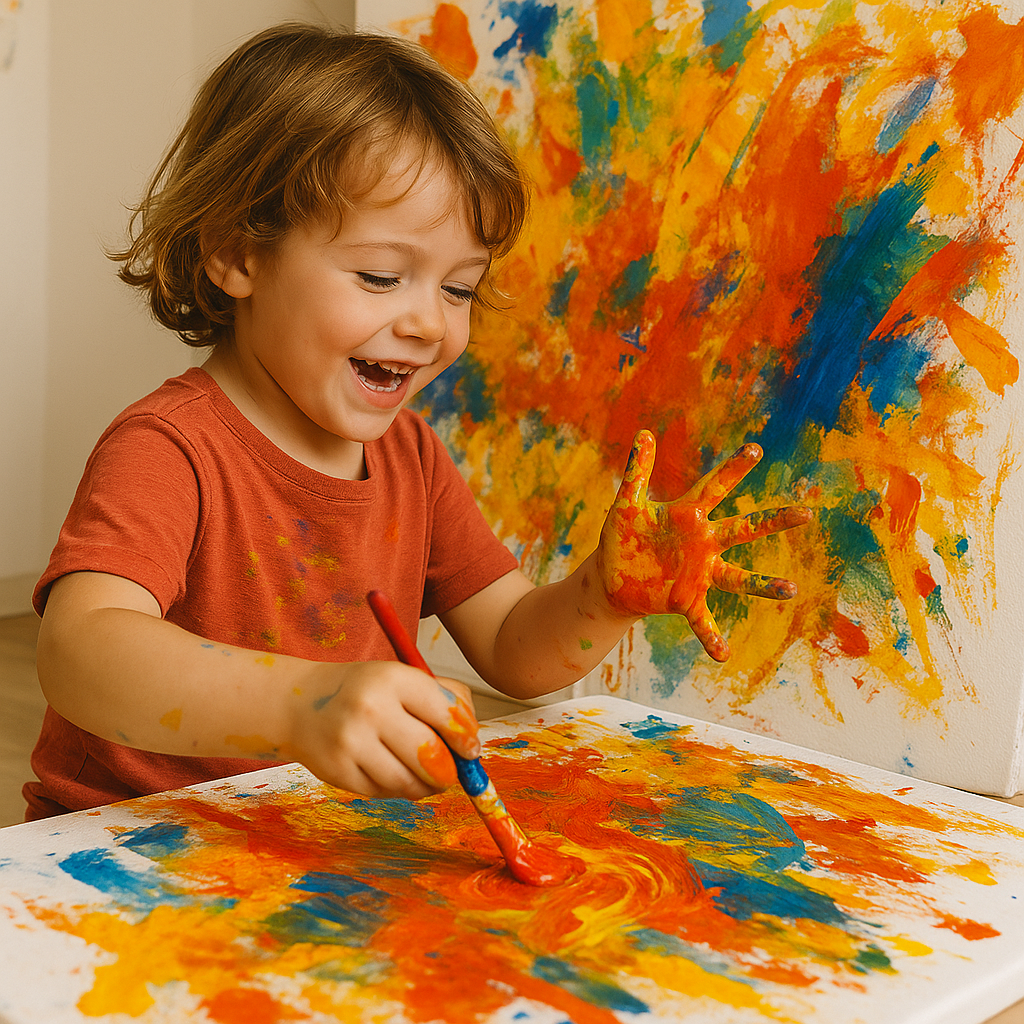
In traditional art instruction, children often learn by imitation — drawing what they see. In abstract art, they learn by interpreting what they feel. Every brushstroke, splash, or swirl is an act of freedom.
By removing the pressure to “draw something recognizable,” we allow children to engage with pure creativity. They choose colors that mirror their moods, shapes that reflect their energy, and patterns that emerge intuitively.
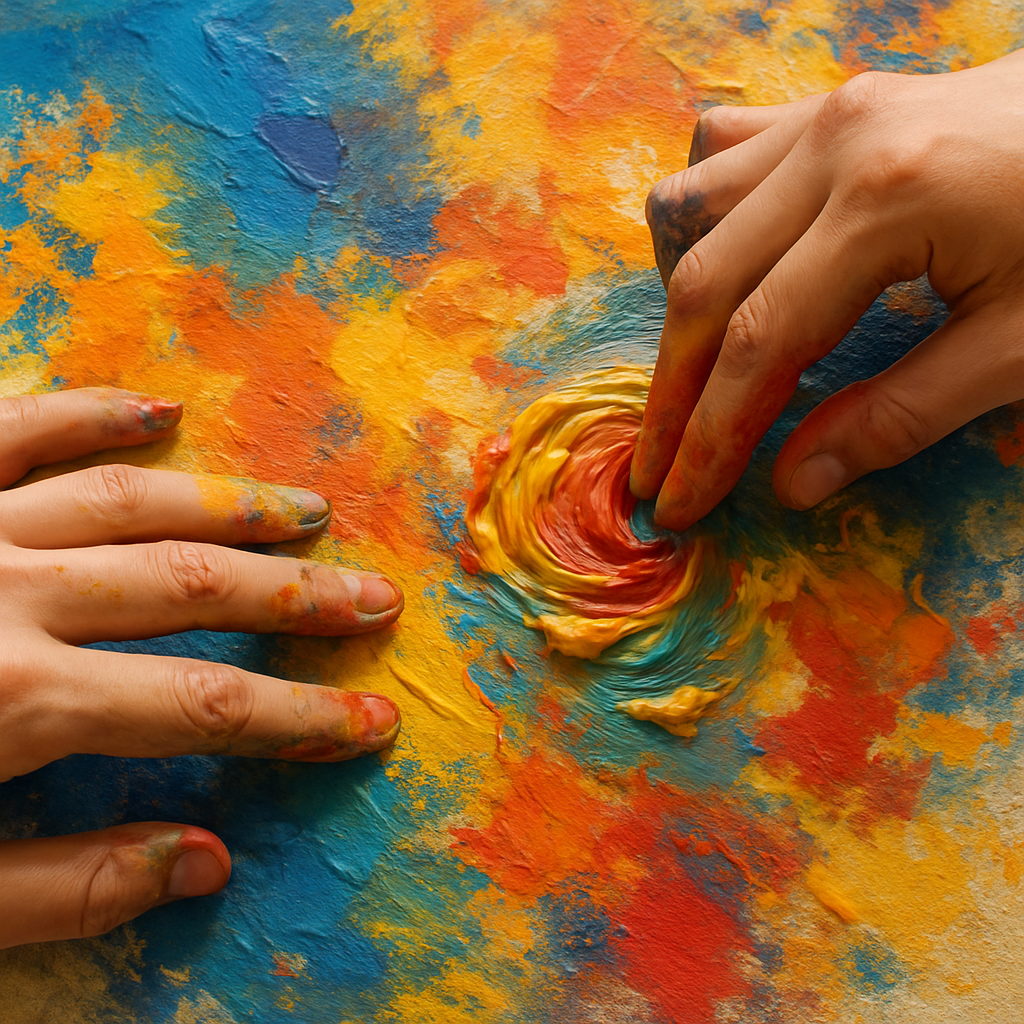
In my classroom, I often introduce materials like sponges, fingers, textures, or natural tools — anything that encourages play. The goal is not to achieve mastery, but to experience joy. This freedom invites curiosity and teaches children that there is no single right answer in art — or in life.

Teaching children to see with their hearts before their eyes
Emotion: Turning Feelings into Visual Language
Children often experience emotions deeply but struggle to articulate them. Abstract art becomes a safe and joyful outlet — a visual vocabulary for their inner world.
Through color, movement, and form, children learn to translate feelings into expression. Red might mean excitement or frustration. Blue might soothe. A burst of color might be happiness; a mix of tones, reflection.
In Montessori pedagogy, we value the child’s inner guide — the natural inclination to make choices that support their development. Abstract art nurtures this process, allowing emotion to flow through creative action. It teaches emotional intelligence, empathy, and mindfulness — all while building artistic skill.
Discovery: The Art of Process, Not Perfection
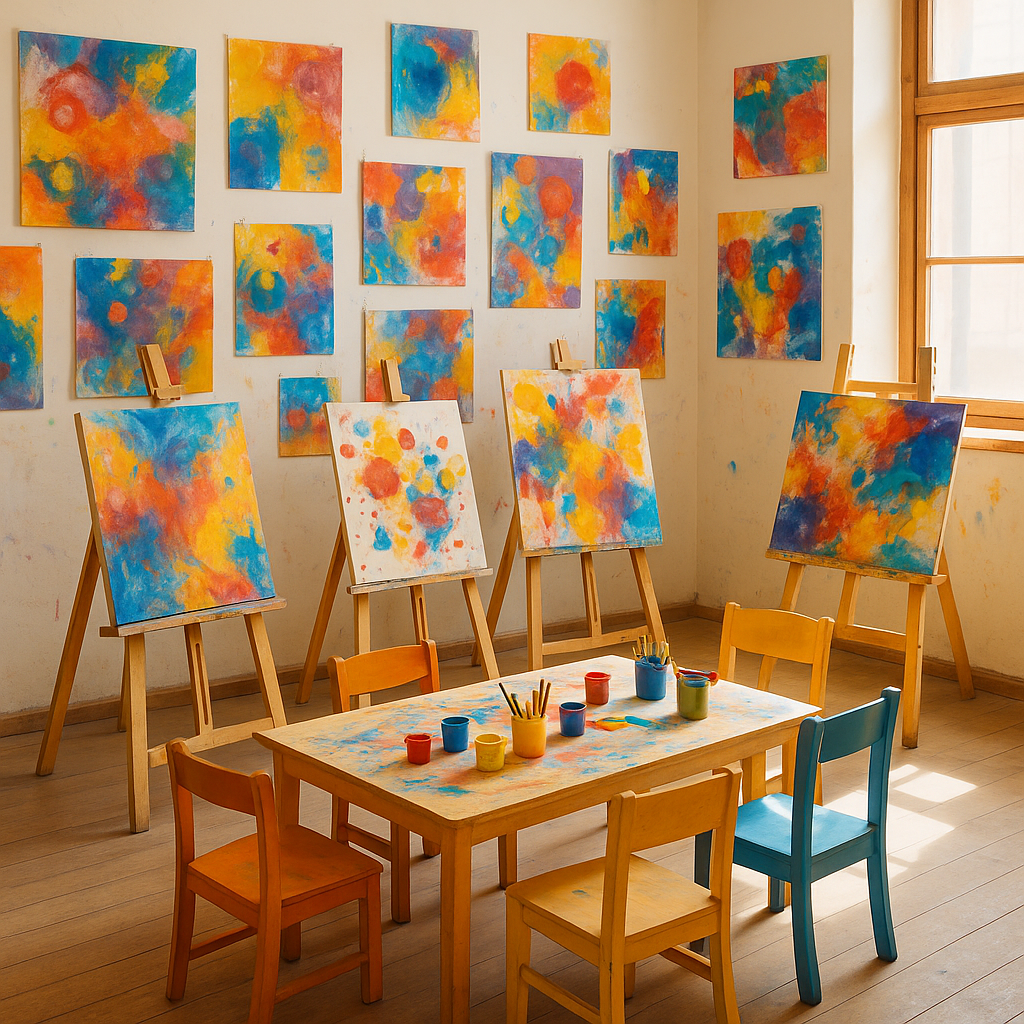
When children engage with abstract art, they learn to trust the process. There’s no “finished” product to compare — only exploration.
This mirrors the Montessori approach, where learning is experiential and self-directed. In abstract art, each layer, mark, or accidental mix becomes part of the story. The child learns to observe, adapt, and find beauty in imperfection — essential lessons for both art and life.
Discovery also happens in observation — stepping back, noticing new patterns, recognizing how colors interact. I often encourage children to talk about what they see and feel after creating. Their reflections reveal insight, imagination, and confidence in their own voice.
Why Abstract Art Matters in Early Education
Teaching abstract art isn’t just an art lesson — it’s a lesson in thinking, feeling, and being. It develops cognitive skills, spatial awareness, and motor coordination, but more importantly, it cultivates:
-
Confidence — the belief that their ideas matter.
-
Creativity — the courage to explore without fear of mistakes.
-
Mindfulness — the presence to enjoy the process.
-
Resilience — the ability to see beauty in unexpected outcomes.
In a world driven by outcomes and comparisons, abstract art reminds children (and us) that the journey is the masterpiece.
Final Thoughts
As an artist and educator, I believe that every child has an inner world waiting to be expressed. Through abstract art, we open a door to that world — filled with color, feeling, and discovery.
When children are given the tools and trust to explore freely, they don’t just create art — they create themselves.

Related Posts


Texture in Digital and Physical Art | Exploring Materiality
When you are alone for days or weeks at a time, you eventually become drawn to…